Loading


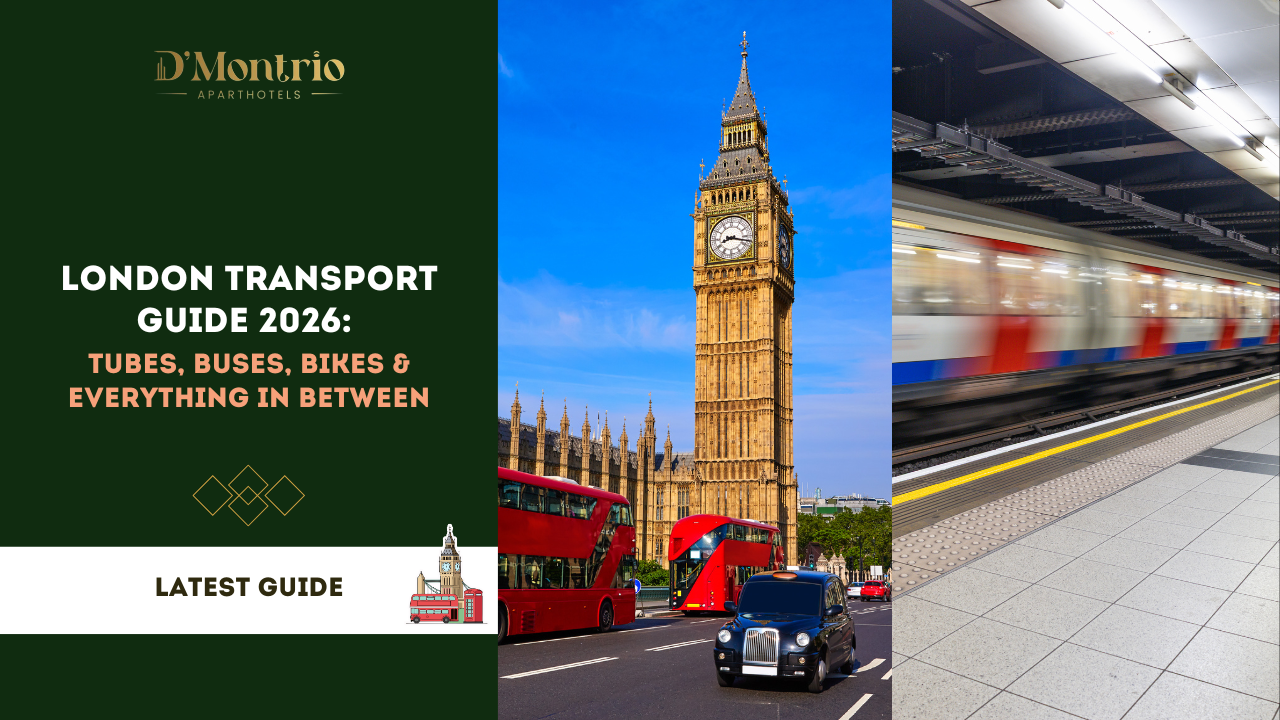
London's transport network is extraordinary. It's also, if you arrive unprepared, the kind of thing that eats your first morning whole.
This guide fixes that. Whether you're a first-time tourist trying to decode Zone 1 from Zone 3, a business traveller landing at Heathrow at 7am with a meeting at 9, or a digital nomad moving between neighbourhoods for the next three weeks this is everything you actually need to know about getting around London in 2026. No jargon, no filler. Just the map, the money, and the moves.
First, The One Decision That Changes Everything
Before you step onto a single platform, there's one question that determines how much you spend on transport all week:
Oyster card or contactless?
The answer, for most visitors in 2026, is contactless and it costs you nothing extra to use.
Both Oyster and contactless payment offer the same fares and the same daily and weekly caps. The daily cap for travel within Zones 1 and 2 sits at £8.90 in 2026. Once you hit that ceiling, every further journey that day is free. Tap your bank card, your phone, or your watch and London's entire network opens up.
The weekly cap for Zones 1 and 2 is frozen at £44.70 until March 2027 meaning a full seven days of unlimited central London travel for under £45. For reference, a single Zone 1 paper ticket costs £7.00. That's more than double the contactless fare, avoid paper tickets entirely.
When does an Oyster card still make sense?
If you're travelling with children aged 11–15, an Oyster card lets you load a Young Visitor discount for half-price travel, valid for 14 days and set up by staff at any Tube station. Otherwise, your contactless card is the smarter, simpler tool.
The Tube: London's Backbone (And How Not To Fear It)
The London Underground, 11 lines, 272 stations, running from 5am to midnight is the fastest way across the city for almost any journey. The colour-coded map looks complex at first glance. In practice, most visitors spend 90% of their time on six lines.
The ones you'll actually use:
Elizabeth line (purple) - Heathrow to central London, Paddington to Liverpool Street. Fast, spacious, air-conditioned. The line that changed London travel.
Central line (red) - Oxford Circus, Tottenham Court Road, Liverpool Street. The tourist workhorse.
Victoria line (light blue) - Victoria, Green Park, Oxford Circus, King's Cross. Fastest north-south connection.
Jubilee line (silver) - Westminster, London Bridge, Canary Wharf. Essential for business travel east.
Piccadilly line (dark blue) - Heathrow (cheap option), Knightsbridge, Covent Garden, King's Cross.
Northern line (black) - London Bridge, Borough, Camden, Angel. The social life line.
Understanding zones: Most tourist sights sit in Zones 1 and 2. Zone 1 covers central London - Westminster, Soho, the British Museum. Zone 2 takes in Camden, Notting Hill, Greenwich, and Canary Wharf. If you're staying with D'Montrio in Fitzrovia, Westminster, Baker Street, or South Kensington, you're squarely in Zone 1 for the entire trip.
Peak vs off-peak: Peak fares apply Monday to Friday between 6:30–9:30am and 4–7pm. Off-peak fares apply at all other times, including all day Saturday and Sunday. If your schedule allows any flexibility, travelling just outside those windows saves money immediately.
⚡ 2026 tip: Tube strikes have affected London this month. The Elizabeth line is running normally during industrial action as its staff are not part of the RMT strike. Always check the TfL Go app before travelling for service status updates in real time.
Staying near a central Tube station matters more than most visitors realise and our neighbourhood guide explains exactly why: read "Where to Stay in London: Best Areas for Tourists, Business & First-Time Visitors" here.
Getting In From the Airport: The Honest Comparison
Your first London transport decision happens before you reach the city. Here's what each airport option actually costs and delivers.
From Heathrow — three options, three trade-offs:
The Piccadilly line is the budget option - just a single from Heathrow to Zone 1 costs around £5.90 using contactless or Oyster, but the journey takes 45–60 minutes depending on stops. Perfectly fine if you're not in a rush and travelling light.
The Elizabeth line offers the middle ground - Paddington in approximately 28 minutes, or a central West End station in under 40. The fare between Heathrow and Zone 1 sits at £15.50, which is a premium fare sitting outside standard daily capping.
The Heathrow Express is the fastest option at 15 minutes to Paddington, but carries some of the highest airport rail fares in Europe. Worth it for business travellers with early meetings; less justified for leisure visits.
The honest verdict: For most visitors, the Elizabeth line is the sweet spot because it's fast, comfortable, direct, and a fraction of the Heathrow Express. The Piccadilly line wins on price if time isn't a factor.
From Gatwick: The Gatwick Express runs directly to Victoria in 30 minutes. Thameslink also runs to Blackfriars, City Thameslink, and St Pancras — often cheaper if you book ahead on Trainline.
From Stansted: The Stansted Express to Liverpool Street takes approximately 47 minutes. Note that the Circle line, which connects Liverpool Street to wider London, has faced disruptions recently, check TfL status on arrival.
Book your D'Montrio apartment near Liverpool Street or Baker Street, they are natural landing points from every London airport.
London Buses: Underrated, Scenic, and Smarter Than You Think
Most visitors default to the Tube and miss one of London's great pleasures: the bus.
A single bus or tram journey costs £1.75 and includes the Hopper fare with unlimited transfers to other buses or trams within one hour of your first tap. That means two or three connected journeys across central London for £1.75 total. The daily bus cap is significantly lower than the Tube cap which is worth knowing if you plan a bus-heavy day.
The routes worth knowing:
Bus 11 passes the Houses of Parliament, Westminster Abbey, St Paul's Cathedral, and the Bank of England which is a moving tour of London's most iconic architecture for £1.75.
Bus 24 runs from Hampstead Heath through Camden, Oxford Street, Trafalgar Square, and down to Pimlico, the north-south social artery.
Bus RV1 connects Covent Garden, Waterloo, and Tower Bridge via the South Bank, the riverside route that no tourist map ever highlights, but should.
Upstairs, front row. Always. Non-negotiable.
For late-night travel, the Night Bus network runs throughout the night across every route. On Fridays and Saturdays, the Night Tube also runs on the Victoria, Jubilee, Central, Northern, and Piccadilly lines meaning post-midnight travel across the city is genuinely straightforward on weekends.
Planning a summer event in London? Our London Summer Festivals 2026 guide covers exactly which transport routes matter most on event days - read it here.
The Elizabeth Line: London's Game-Changer
If you haven't heard of it, you will the moment you arrive. The Elizabeth line is now London's single busiest railway, having recorded over 500 million passenger journeys in just two and a half years surpassing any other UK service.
It runs as a single continuous route through central London, connecting Heathrow and Reading in the west with Shenfield and Abbey Wood in the east. The central section passes through Bond Street, Tottenham Court Road, Farringdon, and Liverpool Street linking London's major business, shopping, and transport hubs in a single line.
For business travellers especially, this line is transformative. Farringdon has become one of the most powerful interchange points in the city, linking the Elizabeth line with Thameslink and the wider national rail network. Canary Wharf, the City, Paddington, and Heathrow are all connected without changing trains.
Every Elizabeth line station has step-free access between street and platform, and contactless payment is accepted at all stations.
For the Business travellers our dedicated guide covers exactly how to make the most of a London work trip: read "Why Serviced Apartments in London Are the Smartest Choice for Business Travellers" here.
Cycling: The Secret Weapon for Neighbourhood Exploring
Between Tube stations, nothing beats a bike and London makes it easy.
Santander Cycles operates over 800 docking stations and 12,000 bikes across central London, covering Westminster, Soho, Camden, and many more popular areas. The scheme runs 24/7, 365 days a year.
A Day Pass costs £3 for unlimited 30-minute hires across 24 hours. For exploring between D'Montrio's neighbourhoods Fitzrovia to Notting Hill, Baker Street to South Kensington which is a Santander Cycle is frequently faster than waiting for the Tube and infinitely more enjoyable on a clear morning.
Hire via the Santander Cycles app or tap your bank card directly at any docking station. E-bikes are now part of the fleet at many stations for those who want a little less effort on London's hills (there are mercifully few).
One walking tip worth its weight: The walk between Covent Garden and Leicester Square takes just four minutes which is far faster than queuing for the lift at Covent Garden station. Similarly, Knightsbridge to Sloane Square takes around ten minutes on foot. In central London, walking is often the fastest option and is always the most interesting.
For our full guide to exploring London's neighbourhoods on foot and by bike, read "Exploring London Like a Local: The Charm of D'Montrio Neighborhoods" here.
The Apps Every London Visitor Needs
Download these before you land. They will save you time, money, and the particular misery of staring at a paper Tube map while a train closes its doors.
Citymapper - the best app for getting around London on public transport, sharing the fastest, cheapest and best routes as well as any delays in real time. It covers every mode of transport including Tube, bus, Elizabeth line, DLR, cycling, and rideshare and crucially tells you which carriage to board for the best exit at your destination.
TfL Go - the official TfL app for live service updates, step-free access information, and Oyster card management. You can top up your Oyster and check your journey history directly in the app.
Trainline - for any journey outside London to Brighton, Edinburgh, Manchester, or beyond. Book ahead for significantly cheaper fares.
Uber / Bolt - for late nights when the calculation tips toward a shared car. Black cabs are a London institution, but rideshare apps are considerably cheaper for most journeys.
The Digital Nomad & Business Traveller Quick-Reference
For those in London for a week or more working between meetings, hopping between co-working spaces, or based in a D'Montrio apartment for an extended stay here's the transport logic that makes long-term London work:
Weekly cap: £44.70 for Zones 1–2, frozen until March 2027. Use the same contactless card all week, Monday to Sunday, and the cap kicks in automatically. No faff, no thinking.
Peak avoidance: If your schedule is flexible, simply shifting meetings to start at 10am means you travel off-peak both ways. Over a working week, the savings are meaningful.
The Elizabeth line advantage: For anyone based near Paddington, Liverpool Street, or Farringdon the Elizabeth line connects you to Heathrow, Canary Wharf, the City, and the West End without a single change. It's the business traveller's network within the network.
Cycling between meetings: In central London, a Santander Cycle between appointments in Fitzrovia, Soho, and the City frequently beats the Tube for speed. No waiting. No crowding. Door-to-door in minutes.
If you're working remotely from London, our full guide covers everything from co-working spaces to cost of living - read the "Digital Nomad Guide to Working & Living in London" here.
Staying at D'Montrio means you're already in Zone 1, so the daily cap works harder for you, every single day.
The London Transport Cheat Sheet
For the moments when you just need the answer fast:
Tube hours: 5am–midnight (Mon–Sat). Night Tube on Fridays and Saturdays on key lines.
Daily cap Zones 1–2: £8.90
Weekly cap Zones 1–2: £44.70
Single bus journey: £1.75 (includes Hopper - unlimited transfers within 1 hour)
Heathrow → Central London: Elizabeth line ~£15.50 (28 mins) / Piccadilly line ~£5.90 (50+ mins)
Best app: Citymapper
Never buy: Paper single tickets (£7.00 vs £3.00 on contactless)
Always check: TfL Go before travelling during events or on weekends (planned engineering works are common)
London's transport network rewards the prepared. Know the cap, use contactless, download Citymapper, and the city opens up effortlessly.
The only thing left to sort is where you're sleeping.
Explore D'Montrio's apartments - your central base, already inside the network that runs the whole city.

.png)
.png)
.png)
.png)